For further information, please contact us at closertosicily@hotmail.com
Closer to Sicily – Aroma, Flavour, Taste
With its position in the centre of the Mediterranean, and an ideal climate, fruit, bread, cheese and vegetables are of excellent quality. That food, its preparation and consumption should be of such absorbing interest for Sicilians is not so surprising; their cuisine is the sum of many different foreign dominations, each one of which introduced new foods and cooking techniques. Sicilians have known and used saffron since prehistory; they were the first in Italy to cultivate artichokes, and the first to use rice. The Arabs, in fact, in the 9th century created rice-paddies in the meadows south of Catania, between the Simeto and the San Leonardo rivers, and also introduced citrus, dates, sugar-cane, aubergines, pistachios, a taste for cinnamon, and the use of terracing and irrigation in the countryside. Pasta, in the form of vermicelli, was already being made at Trabia near Palermo in the 12th century, according to King Roger II’s geographer el-Edrisi, long before Marco Polo brought some back from China, and it was certainly the Sicilians to invent sun-dried tomatoes. In fact tomatoes, together with chilli pepper and chocolate, had arrived with the Spanish in the 17th century. A hundred years later, the Kingdom of the Two Sicilies, based in Naples, ushered in the demand for the expensive, capricious, but indispensable monzù, the French cook that the aristocratic families of the island deemed a status-symbol, and with him came butter, cream, and refined sauces and soups.
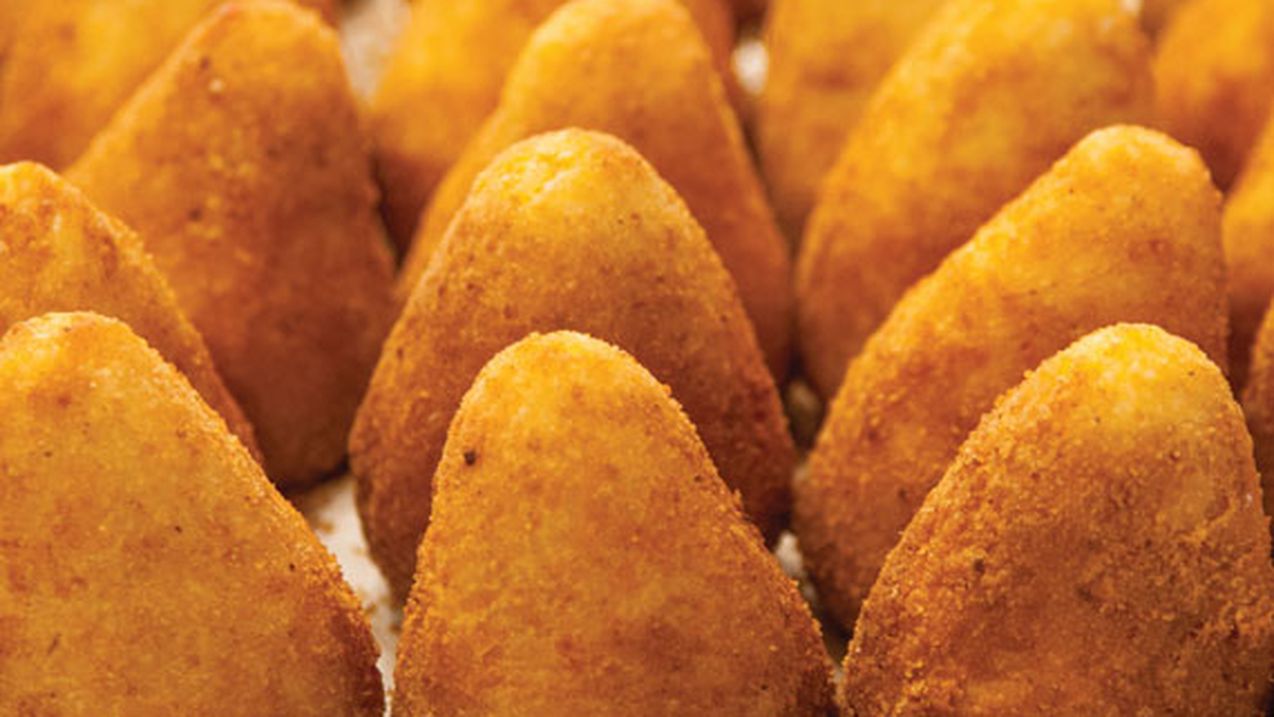
Many local writers have described the symphony of colours, aromas and flavours which can be achieved only in Sicily. Federico De Roberto, in his I Viceré, opens for us the monastic kitchens of San Benedetto in Catania, Giuseppe Tomasi di Lampedusa in Il Gattopardo conjures up the magnificent banquets prepared by the prince’s French monzù, and Andrea Camilleri, his mouth probably watering, evokes Chief Inspector Montalbano’s arancine, golden-brown rice balls, or his favourite grilled red mullet and baby octopus.
SICILIAN SPECIALITIES
Bread
Sicilian bread varies enormously in shape, size, colour and flavour. Each family eats an average of almost 100kg of bread a year, which is more than most other Italians (all great bread eaters), and they treat it with almost religious reverence. It is always placed face up on the table, and is kissed if it falls on the ground. Often made using the sourdough method and topped with sesame seeds, it is preferably cooked in stone ovens, which are heated by burning olive, almond, oak, lemon or orange wood, or even almond shells, depending on whatever fuel is more abundant. Some bakers can trace the origin of their sourdough back over 200 years. The basic ingredient is durum-wheat flour, usually a blend of different varieties. At Castelvetrano, for example, the coffee-coloured loaves owe their aroma and rich flavour to the addition of tumminia flour, which grows only in a very small area, and is thought to have been first cultivated by the ancient inhabitants of Selinunte, while in Lentini they use timilia wheat. Other localities renowned for the quality of the bread are Monreale, Favara, Novara di Sicilia, Montalbano Elicona and San Giuseppe Jato. Bread is at the centre of several religious festivities in the course of the year, some probably of pagan origin. At Campofranco, for example, for the feast of St Calogero huge ‘bread-men’, almost life-size, are paraded around the town with the saint, before kissing him goodbye, and being broken up by the priest and divided among the onlookers, while in Agrigento the same saint is pelted with tiny loaves thrown from the balconies as he makes his progress through the streets. 18 March, St Joseph’s day, is the occasion for baking particularly fancy loaves to place on the altars set up in the streets of many towns, together with hundreds of different foods which will be presented to the poor; but nowhere is this art expressed better than in Salemi, where the loaves are worked with such intricacy they look like delicate carvings in old ivory.
Olive oil
Sicilian olive oil is excellent. So many different soil types, and slight local variations in climate, mean that several different varieties of olive tree can be cultivated, some of which can be traced back thousands of years, and may be native to the island. Sicily provides only 10 per cent of the entire national production of oil, but by far the largest quantity of olives for salting and curing, both black and green. The finest groves are probably those of the province of Trapani, around Castelvetrano. Here the trees are pruned to stay very small, almost bonsai size, and the olives are picked by hand, resulting in perfect oil and sublime pickles. Oil to rhapsodise over is also produced at Caronia (Messina), Ragalna, Bronte and Mineo (Catania), Syracuse, and Chiaramonte Gulfi (Ragusa), where the precious liquid is the linchpin of the economy, and there is even an olive-oil museum. Nowadays the best oils are protected by the DOP seal (denominazione d’origine di produzione), a guarantee of quality similar to that offered to the finest wines.
Confectionery
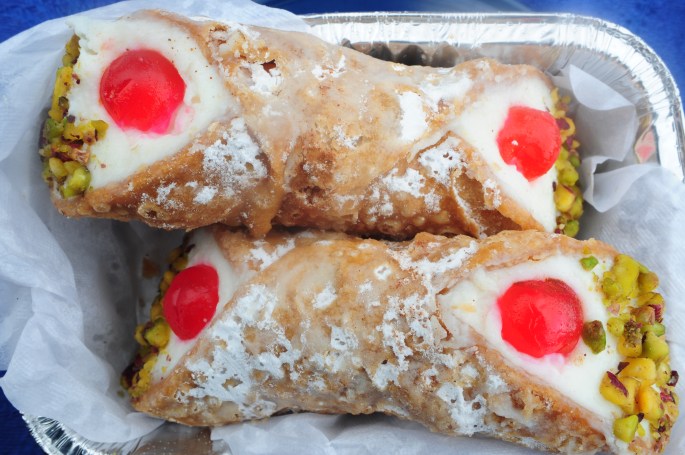
Sicilian confectionery is a delectable riot of colours, aromas and flavours: there are the simple, fragrant breakfast pastries; crystallised and candied fruits; fruits made of marzipan; nougat; biscuits made with almonds, pistachios or hazelnuts; crunchy cannoli filled with sweet ricotta cheese; the elaborate Baroque complexities of the magnificent cassata siciliana, filled with ricotta; and the light and delicate paste di mandorla, the almond pastries of Acireale. Every town or village has its own speciality, and different sweets are prepared for the main feasts of the year. The abundance of local nuts and fruits, and the fortunate introduction of sugar by the Arabs, are at the base of the Sicilian tradition, perfected through the centuries first by the Arab ladies in their harems, preparing sweet delights to offer to guests, and later by the nuns in many convents in Sicily. They achieved such excellence that their exquisite confections were always much in demand, especially at Easter-time: the nuns were kept so busy that the bishops were forced to intervene, warning the sisters to abstain from baking, at least during Holy Week, and to dedicate their energies to prayer instead.
Ice cream
Italians eat a lot of ice cream (apparently only Americans and Australians eat more), but Sicilians like it so much, they even have it for breakfast. It is quite possible that ice cream was invented in Sicily: we know that the Romans were bringing down snow from Mount Etna during the winter. They stored it in niviere, pits dug in cool cellars, covering it with a thick layer of straw or sawdust to keep it fresh until summer. It was then recovered and mixed with wine, honey and spices, and sold as a great luxury to those who could afford it. The Arabs in Sicily took the process one step further, by using sugar instead of honey, and fruit juice instead of wine; they called their confection sharbat (hence sherbet; sorbet). But the first confectioner to have the brainwave of adding cream to the mixture was a young late-17th-century Sicilian, Procopio de’ Coltelli of Acitrezza. He took his discovery to Paris, to delight Louis XIV; the king gave him the exclusive rights of manufacture. He opened the Café Procope, still in existence, which claims to be the world’s first coffee-house, frequented by Voltaire, Benjamin Franklin and much of Parisian society.
In Sicily the manufacture of ice cream is still a point of honour, and there are plenty of pastry-shops and coffee-bars where you will find ice cream made on the premises. A list of ingredients by the counter is a very good sign. Gelato is ice cream made with eggs and milk or cream. Granita is fruit juice (or coffee, or chocolate, ground almonds or pistachios) and sugar, frozen together. The secret is to obtain a very fine-grained, thick but not too thick consistency. Cremolata and sorbetto are variations on the theme, which sometimes see the addition of egg-whites.
In Sicilian towns from April until October the ice-cream vendors take up their stands in the early morning, and blow a whistle or ring a bell to announce breakfast. People sometimes come down into the street in their pyjamas. Ice cream is usually served in a soft brioche bun, like a sandwich. Granita comes in a plastic cup, into which pieces of brioche are dunked. You can have several flavours at the same time, and even add a dollop of whipped cream. In city centres people will have their ice-cream breakfast at the coffee-bar. Wherever it takes place, it is the first moment of social aggregation of the day.
Soft drinks
The thirsty Sicilian asks for latte di mandorla (almond milk), made with crushed almonds and sugar diluted with water and chilled (the best will be found in Catania and Modica). Very sweet, it is surprisingly refreshing. In town centres, kiosks serve other inexpensive thirst-quenchers: freshly-squeezed lemon juice with soda water and a pinch of salt is one of the most popular (selz, limone e sale). Kiosk owners often make their own fluorescent fruit syrups, which are then diluted with soda water. Cheap and popular fizzy drinks, which have been around for generations, are spuma, gazzosa, and chinotto.
WHAT YOU WILL FIND WHEN YOU COME CLOSER TO SICILY
Palermo
The people of Palermo love to eat street food, such as a soft spongy pizza called sfincione, or puppu (boiled octopus). Chick-pea fritters or beef spleen are delicious sandwiched in crunchy bread rolls, or you might choose stigghiole, intestines of sheep or kid wound around a piece of cane and grilled. Palermitans are also the acknowledged masters in the preparation of pasta con le sarde, macaroni served with a rich sauce of wild fennel, anchovies, onion, fresh sardines, pine nuts, currants, saffron, almonds, and sometimes tomatoes – an addition which is frequently hotly disputed. Pollina and Castelbuono in the Madonie Mountains are the only places in the world where the manna-ash trunks are incised (like maple trees) to collect the manna, white syrupy sap, which is dried and used for making medicines and sweeteners. Also from the Madonie Mountains comes provola, sweet-flavoured sheep’s milk cheese, each weighing about 1kg, with a little ‘neck’ to hang it from as it ripens. On the island of Ustica, tiny, dark brown lentils are grown completely without herbicides or fertilisers; donkeys dragging stones are still used for threshing. They are soft, tender and quick to cook. Late-ripening tangerines can be found at Ciaculli, in the Conca d’Oro behind Palermo.
Trapani
The salt pans of Trapani (now a UNESCO World Heritage Site), so jealously husbanded by Phoenicians and Romans, and profitably used by the Florio family in the 19th century, meant that Trapani’s fabulous bluefin tuna could be salted, preserved and exported widely; likewise the island’s sardines and anchovies. Red garlic is grown in the salt marshes around Nubia. It has small corms, red skin, and an intense flavour. The island of Pantelleria is famous for its capers: very small and strong-flavoured, they are the flower buds of the plant, gathered just before blossoming. Black bread is baked in stone ovens in Castelvetrano, using the sourdough method, and a mixture of two different kinds of durum wheat. The crust is very dark brown, almost black, the crumb is golden, the flavour is sublime. Vastedda cheeses from the Belice Valley are the small round cheeses mentioned by Homer. Formed in a soup-plate (the meaning of the name in Sicilian), they are made only from local sheep’s milk, which is kneaded and pulled. Slightly elastic, it has a vague aroma of vanilla. The production is very small (only 15 people make it), and the cheese must be eaten fresh. The winter melons from Trapani are bright yellow, very sweet, and stay good until Christmas. Cooks of Trapani are acknowledged masters in the art of preparing durum-wheat cous cous served with a rich fish broth; so good that there is even an annual Cous Cous Fest at San Vito Lo Capo, an eagerly-awaited event, when chefs from Trapani, the Middle East and Africa (where cous cous is usually served with meat and vegetables) compete with their culinary miracles to win the coveted award.
Agrigento
Girgentana goats from Agrigento are a highly-prized breed. These attractive animals with their long horns and silky hair are exploited for their milk and their skins. Wild strawberries from Ribera are derived from seedlings brought back to Sicily from the Alps, by soldiers who had fought in the First World War. The island of Lampedusa is famous for its cernia (sea-perch or grouper).
Caltanissetta and Enna
Inland, at Caltanisetta and Enna, we find again the sheep’s cheeses: tuma, primosale and pecorino, often with the addition of black peppercorns or coriander seeds, and even (in the province of Enna) of wild saffron, gathered in spring from the hillside crocuses. Here, too, are the finest beans and pulses, essential ingredients in dishes such as the zuppa di ceci (chick-pea potage) or maccu di fave (broad beans seasoned with wild fennel). Late peaches from Leonforte are succulent: these strong-flavoured, yellow peaches ripen from September to November; each fruit is protected in its own little bag, from birds, insects and hail.
Ragusa and Syracuse
Modicana cattle from Ragusa and Modica graze in the open air, indifferent to the hot climate. The meat is tough but good; the excellent milk is used for making several different local cheeses, such as caciocavallo. It is pressed into long rectangular shapes, and then hung two by two over a beam to mature. The town of Modica has the reputation of producing the best food on the island, both in the restaurants and in the households; chocolate is still prepared according to the Aztec tradition (see p. ???). Almond trees are grown everywhere in Sicily, and probably form part of the native flora, but those from Noto and Avola – pizzuta d’Avola – have the finest flavour of all. Along the coast you will often find pasta prepared with fish.
Catania
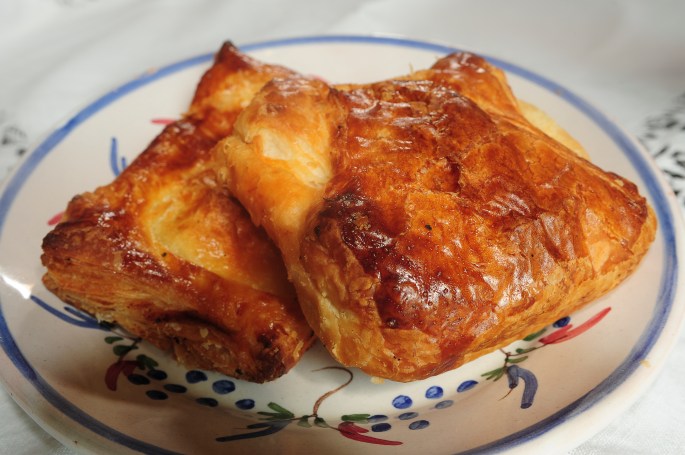
Though the soil is fertile in central Sicily, no area can compare with the hinterland of Catania, where rich volcanic soil and sunshine give an intensity to the fruits and perfumes of its orchards and gardens. This is the secret of the huge success of its ices and sorbets, and its citrus summer salads. In fact, a healthful simplicity informs the food of this area, so much of which is based upon the household bread-oven: golden pies called scacciate, richly-filled focacce, vegetables grilled over charcoal, and fish and seafood wrapped in fig or citrus leaves and then roasted over the coals. Sheep’s milk ricotta from Vizzini is as rich as double cream. Pistachios from Bronte were introduced by the Arabs and the nuts now grown on Mount Etna have a superb flavour and are deep emerald green in colour. Snuff-box peaches from Mount Etna (pesche tabacchiera) are small, flat and intensely aromatic. Sicilian blood oranges are protected by the IGP seal (Indicazione Geografica di Produzione). There are several different varieties, all limited to the area of Mount Etna and the Plain of Catania, the only place in the world where the colour of the flesh is so intense, almost purple. From the Gulf of Catania come anchovies, masculini di magghia, so good that they can be eaten raw; the magghia is the fine-meshed net with which they are caught, from small boats. Catania’s special pasta dish is pasta ca’ Norma, spaghetti with a topping of fresh tomato, basil leaves, tasty slices of fried aubergine, and salted ricotta, invented to celebrate Bellini’s triumphal inauguration of the Teatro Massimo Bellini opera house with the première of his masterpiece, Norma. The favourite street food of the people of Catania is the cipollina, a flaky pastry envelope containing onion, tomato, origano, ham and mozzarella.
Messina
The tiny, offshore Aeolian Islands base their cuisine on the intense flavours of the capers (those from Salina are protected) and wild herbs which grow there, such as oregan, thyme, wild fennel, and nepitella (calamint); the currants and the Malvasia grapes which they produce; tasty cheese and ricotta from the goats, and the cactus fruits and miniature lentils which survive in their dry and rocky environment. The islands and the coastal cities have obviously always prized their abundance of fish: in Messina, particularly the swordfish, intercepted in consistent numbers during the periods of migration. Impanata di pesce spada from here is a magnificent envelope of delicate pastry containing the swordfish and its accompaniments of tiny pireddu tomatoes which have been hung up in the kitchen until they wither like raisins, olives, capers, currants, pine nuts and bits of ripe caciocavallo cheese. In the Nebrodi Mountains an ancient breed of black pigs (seen in medieval paintings and probably introduced by the Normans), are allowed to live wild in the woods, eating acorns and beech-nuts. The result is excellent sausage, salami, ham and bacon. In Novara di Sicilia they make maiorchino, round, flat, well-matured sheep’s milk cheese, with a dark brown rind; the forms are even used at Carnival time for a race, rolling them down the main street. Unfortunately, maiorchino is becoming increasingly rare, as its manufacture is very time-consuming.
Wine
Archaeologists confirm the ancient origin of wine production on Sicily, where the first vines were certainly autochthonous. The Greeks taught the trick of cultivating the vine ad alberello, close to the ground, increasing sugar-content and alcohol level; Romans introduced new varieties and new techniques of manufacture. The famous wine of ancient Sicily was Mamertine, said to have been the favourite of Julius Caesar. Even the Arabs, who as Muslims could not drink wine, carefully cultivated and improved the vines, in order to present the grapes as table fruit, and for drying as raisins and sultanas. The heyday of Sicilian wine-making began in the 13th century and lasted some 200 years, a period when Sicilian wines were exported to Rome, Liguria, Venice and Tuscany, playing an important role in shaping the tastes of European palates. Real innovation began in the late 18th century, when the British wine merchant John Woodhouse introduced the Spanish and Portuguese methods of manufacture to Marsala, a great success. The late 19th-century phylloxera blight, which destroyed the vineyards, was a setback, followed after the Second World War by a total neglect of quality—the only thing that mattered at the time was quantity.
Thankfully those days are receding, and we are now seeing the dawn of some energetic and exciting new winemaking. Local and foreign investors in Sicilian viticulture are drawing out the virtues of the island’s terroir. Although traditional winemaking methods are largely giving way to modern technology, the focus is firmly on getting the best out of indigenous grape varieties. A new generation of producers, in the tradition of Vincenzo Florio’s legendary Marsala and Duke Alliata di Salaparuta with his Corvo, are experimenting with new techniques, new varieties and new blends, while nurturing the native vines at the same time. The results are more than satisfactory: they are winning major international awards.
Grape varieties such as Chardonnay, Sauvignon Blanc, Cabernet Sauvignon, Syrah, Sangiovese and Merlot also flourish in the hot dry sulphurous soil, or in the richness of the black lava; even German varieties from the Rhine Valley thrive in Sicily. The grape harvest in Sicily begins early, on some estates even in August. In one or two places the grapes are gathered in the time-honoured way, at night, when the fruit is cool, so that it doesn’t start fermenting too soon, a technique that goes back to the days of the Greeks.
There are at present 23 DOC wine denominations in Sicily (Denominazione d’Origine Controllata), and one DOCG (Denominazione d’Origine Controllata e Garantita. Such a long and complete list means that the island is one of the most important oenological areas in Italy (in fact the province of Trapani comes second only to Bordeaux as the largest wine-producing district in Europe). The areas are as follows:
Alcamo, from the gentle hills between Trapani and Palermo;
Contessa Entellina;
Delia Nivolelli from the banks of the River Delia (‘vineyard’ in Arabic), in the territory of Mazara del Vallo, Marsala, Petrosino and Salemi;
Eloro, from the area of Noto, Pachino, Portopalo di Capo Passero, Rosolini and Ispica;
Erice;
Etna, the first to receive the DOC seal in 1968;
Faro, from the hillsides behind Messina;
Malvasia delle Lipari from the Aeolian Islands;
Mamertino di Milazzo from the foothills of the Madonie and Nebrodi Mountains;
Marsala, DOC since 1984, aged wines of three types, according to colour: Oro (gold), Ambra (amber), and Rubino (ruby). Fine is aged one year, Superiore for two years, Superiore Riserva for four years, Vergine or Soleras for five years. Also, Vergine or Soleras can be Stravecchio or Riserva, aged for ten years;
Menfi;
Monreale;
Moscato di Noto, the pollium mentioned by Pliny, produced in the territory of Noto, Rosolini, Pachino and Avola;
Moscato di Pantelleria, produced exclusively on the island;
Moscato di Siracusa, produced exclusively from the vineyards surrounding Syracuse; the flavour is subtly different to that of Noto;
Riesi;
Salaparuta;
Sambuca;
Santa Margherita di Belice;
Sclafani;
Sciacca;
Vittoria for its Cerasuolo di Vittoria, the only Sicilian DOCG, a characteristically cherry-red wine, pleasantly dry and vaguely aromatic of fruits and flowers.
For further information, please contact us at closertosicily@hotmail.com
 Luxury Sicily Holidays