The new season of this successful US show has been island hopping to show you some of the most interesting places Sicily has to offer.
We describe below in a little more detail some of the filming locations, so you may enjoy more of your visit.
#thewhitelotus #thewhitelotushbo #thewhitelotus2 #whitelotus #whitelotusseason2
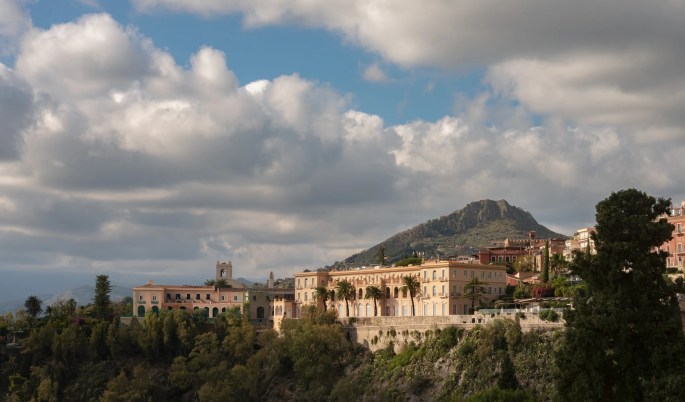
Taormina
Colourful little gem of a town perched on a hilltop, Taormina offers splendid views, from Mt Etna to the south, and over to Calabria and the Straits of Messina. The Greek Theatre, where concerts are presented during the summer, is justly celebrated for its superb setting and acoustics. Intriguing little stepped streets abound, with shops and cafés. The lush public gardens, among the loveliest in Italy, were created in 1899 by Florence Trevelyan Cacciolla, a lady-in-waiting to Queen Victoria. In the 19th century, Taormina became the preferred winter resort of the rich and famous. It was rediscovered after the war by visitors including Truman Capote, Cecil Beaton, Roald Dahl, Jean Cocteau, Salvador Dalí, Winston Churchill, Sibelius, Orson Welles, John Steinbeck, Tennessee Williams, Rita Hayworth, Marlene Dietrich, Greta Garbo and Cary Grant. Elizabeth Taylor and Richard Burton spent at least part of their two honeymoons in Taormina.

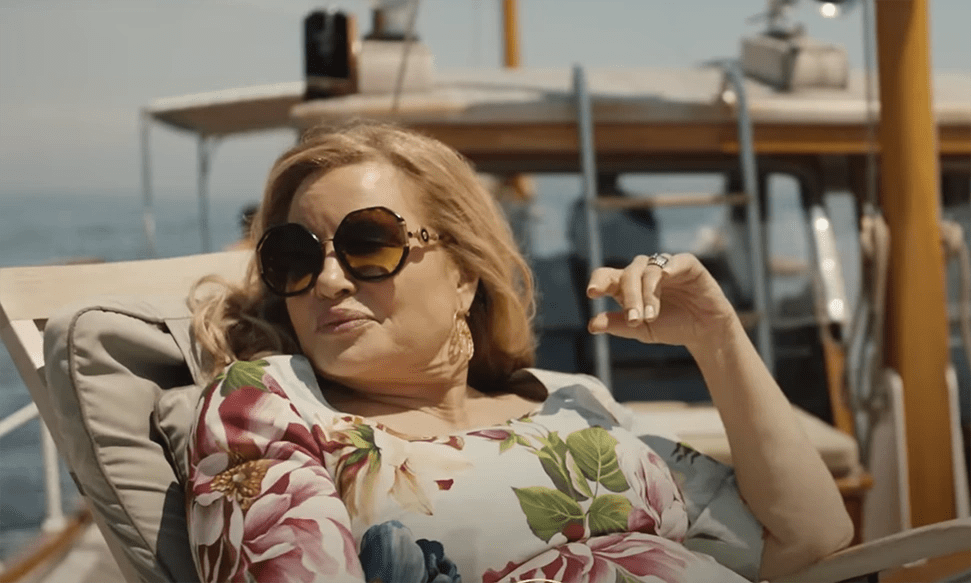
Castelmola
This miniature town sits on a rock with a ruined Byzantine castle, high above Taormina. In the tiny square, with a view from the terrace of Etna and the bay of Naxos, the Caffè San Giorgio was founded in 1907 and has a famous collection of autographs in dozens of visitors’ books, totalling many thousands of signatures. Castelmola is well known for its almond wine, with was invented here at the San Giorgio. Another famous café is in Piazza Duomo, the Caffè Torrisi, with an interesting collection of another sort – phalluses in every shape, size and material. Lovely views abound, from the terrace in front of the church of San Giorgio, the patron saint, or from Mt Veneretta, reached by a long footpath from the cemetery.
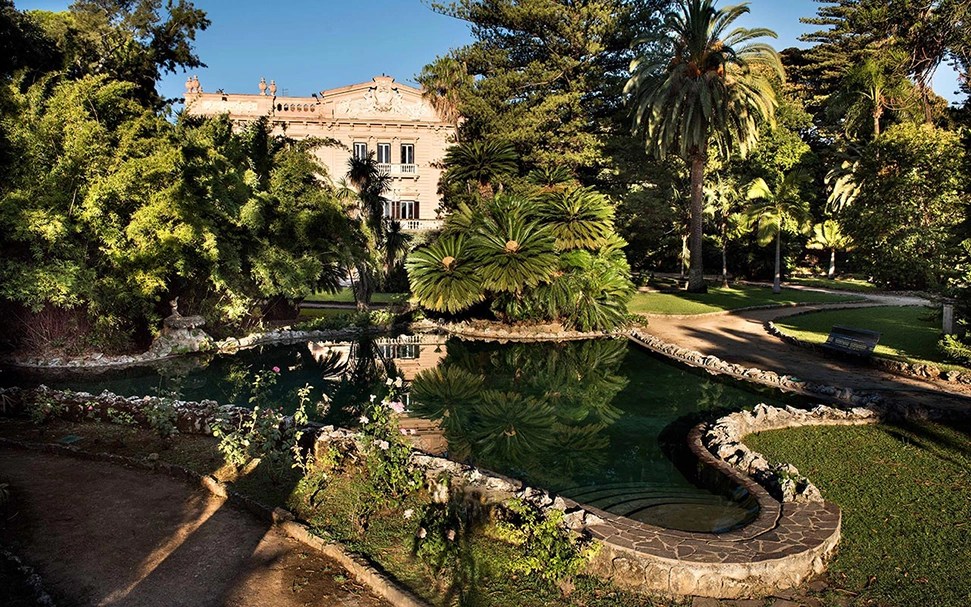

Isola Bella
This fascinating island, a well-known symbol of Taormina, is in the bay of Mazzarò, below the town, and is now an open-air museum. In the 19th century the government sold the island to Florence Trevelyan Cacciolla for 5,000 lire. She built a charming house on it, almost invisible from land. The island was finally acquired by the Sicilian region in 1987. The sea in the bay is surprisingly deep, and several shipwrecks lie on the sea bed. One contains 35 Roman columns of unworked stone, probably destined for a temple or the portico of a villa.
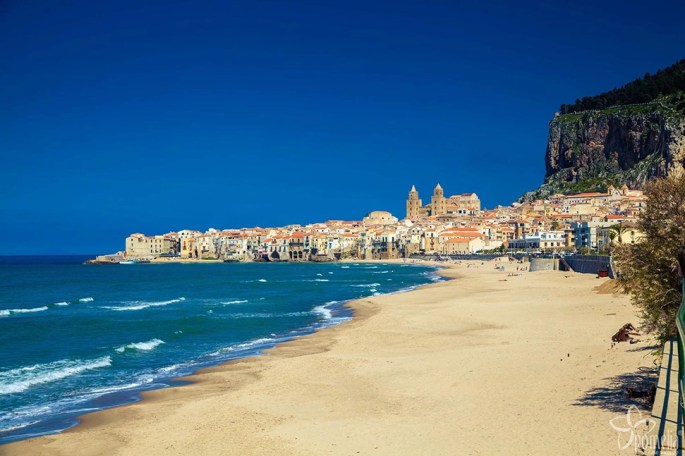
Cefalù
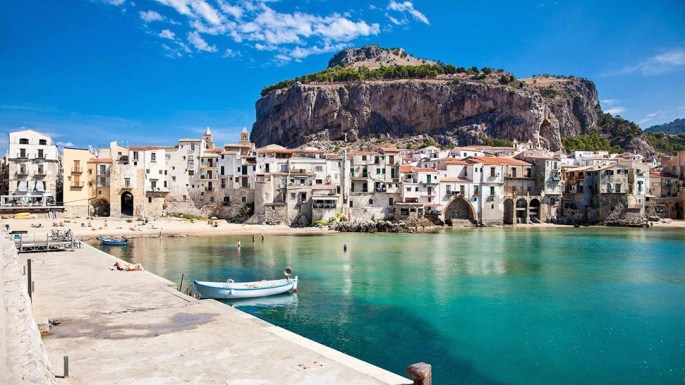
Cefalù, with its stunning Norman cathedral and ruins of an ancient acropolis on the rock above the city, is a very picturesque little city with a lovely sandy beach. The old town is still medieval in character, with many enticing shops, restaurants and cafés along its well-kept streets. Founded at the end of the 5th or early 4th century BC, the ancient Kephaloidion was named from the head-like shape of the rock which towers above it (kephalos = head in Greek). After the Arab domination, in 1131 Roger II of Sicily rebuilt it and constructed the magnificent cathedral, where he would have liked to be interred, and which still displays the exquisite mosaics he commissioned for it. In the interesting Mandralisca Museum you will find the famous Portrait of a Man by Antonello da Messina.
Noto
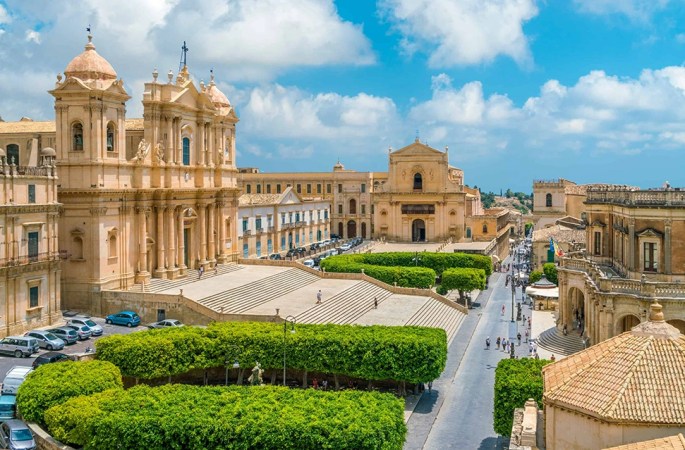
Noto is a good example of the 18th-entury towns in this area, rebuilt in Baroque style after the disastrous earthquake of 1693. Called il giardino di pietra, the garden of stone, by its inhabitants, the local limestone used for the reconstruction has been burnt gold by the sun. After passing through the luxuriant public gardens, the main street is reached through the Porta Reale, surmounted by the three symbols of Noto – the Tower for strength, Dog for loyalty, and pelican for self-sacrifice. A series of dazzling churches flank the main street on both sides, but the most magnificent is the cathedral with its immense façade rising above a dramatic stairway. Opposite is the Town Hall and the Opera House. Noto is renowned for high-quality ice cream and confectionery.
Palermo
Capital of Sicily, Palermo has the most extensive ancient city centre in Europe, abounding in palaces, churches, fountains and gardens, traditional markets and a labyrinth of tiny alleys. Street food here is justly famous, ranging from the arancine rice balls to tempting morsels of octopus, bread rolls sandwiched with chick-pea fritters, crispy fried anchovies and many other delights. The Norman cathedral is stunning, close to the Royal Palace with the glorious Cappella Palatina. While in Palermo, don’t miss the mummified corpses on view at the Capuchin Monastery, and be sure to go to Monreale, with another stupendous cathedral, and cloister.

 Luxury Sicily Holidays